A Comprehensive Guide on Exchange-Traded Notes (Etns)?
Advertisement
Mar 07, 2026 By Rick Novak
ETNs, or exchange-traded notes, are distinct. A bond issued by a central bank or financial institution rather than a separate pool of securities is called an exchange-traded note (ETN). 1 The issuer of an ETN guarantees investors that they will get the index's return during the investment's term and the initial investment upon the note's maturity. ETN holders risk losing a significant portion of their investment if the underlying firm defaults on its payment obligations due to events beyond its control (such as bankruptcy).
One other essential distinction between ETFs & ETNs is that ETNs do not have a board of directors charged with protecting investor interests. Instead, the issuer of an ETN has complete discretion over the management of the ETN, subject only to the guidelines outlined in the ETN's prospectus and price supplements. There is a risk that ETN issuers will conduct off-balance-sheet operations such as proprietary trading or hedging for their accounts.
What Exchange-Traded Notes Are and How They Work
The return of an ETN is based on an underlying market index, and banks often issue ETNs. Exchange-Traded Notes (ETNs) are a form of bond. The ETN will pay the return of the underlying index upon maturity. Nevertheless, unlike bonds, ETNs do not distribute interest to investors.
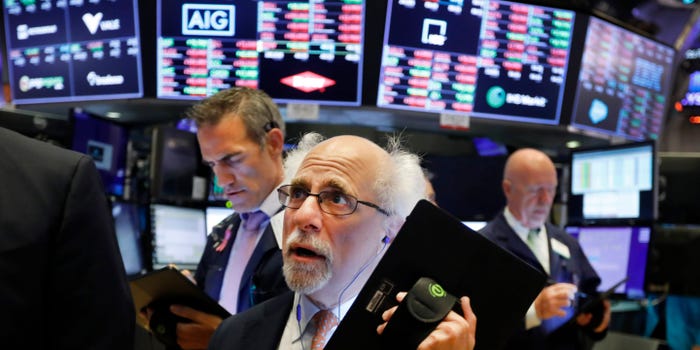
Fees are deducted from the ETN's maturity proceeds before the underlying index's performance is distributed to the investor. Exchange-traded notes (ETNs) trade on major exchanges like stocks, allowing investors to buy and sell them for a profit based on the spread between their respective values (fewer transaction costs).
Exchange-Traded Notes (ETNs) are distinct from ETFs (ETFs). Exchange-traded funds (ETFs) are vested in the index's underlying equities. For instance, an exchange-traded fund (ETF) that mirrors the S&P 500 would own all 500 equities.
Investors in ETNs do not acquire any underlying stocks but receive a payment equal to the return generated by the underlying index. Thus, ETNs are comparable to debt securities. The issuer's ability to provide the promised return based on the underlying index is critical to the success of the offering.
ETNs are issued for $50 per share by most banks and financial organizations. The success of the underlying index influences the market price to some extent.
Characteristics Of Exchange Traded Notes
Asset Ownership
In contrast to the indexes they follow, exchange-traded notes do not own any underlying assets. To give just one example, the ETN tracks the gold index without actually owning any gold.
Unsecured Debt
The issuer's creditworthiness and promise to return the principal investment and any earnings or losses are the only things an investor must go on. When issuing the exchange-traded note, an issuer does not offer any collateral that may be swapped to pay for the losses sustained by the investor.
The Availability of Liquid Assets
Exchange-traded notes (ETNs) can be exchanged on trading days through the exchange and directly with the issuing bank. Any amount redeemed before the specified maturity date will be subject to a redemption fee.
Amount Spent As A Percentage Of Income.
Like most other financial instruments, exchange-traded notes (ETNs) typically have an annual expense ratio. The expense ratio measures the total annualized cost to shareholders for the fund's management and other administrative expenses.
Benefits of Etns
The safety of a debt obligation and the potential investment reward is present in exchange-traded notes. The connected metric would do well in a perfect world, and the borrower would be trustworthy. Here, the letter will provide a stock's returns and the debt instrument's safety.
An Exchange Traded Note (ETN) also has the potential benefit of exposing you to exotic asset classes. A Financial Industry Regulatory Authority notes that although some exchange-traded notes expose investors to well-known, broad-based indexes, others expose them to less famous asset classes or novel, sophisticated, or even proprietary indexes. By doing so, investors can gain exposure and potentially profit from markets they might not have considered.
Some exchange-traded notes will indicate the opposite of a market. Inverse exchange-traded notes (ETNs) are like short sales in that they promise payment based on the contrary of market performance.
Possible Dangers Associated with Using An ETN
Keep in mind that this product is not guaranteed in any way. If the borrower stops making payments on the note, you will likely have few options.
Any investment in an ETN carries the additional risk of fluctuating prices. In contrast to a bond, an ETN does not provide a fixed interest rate or payment at maturity. If the underlying metric that the note is tied to underperforms, the return on the investment could be very low or even zero. If the metric loses value, you may not recoup any of your initial investment at all.
The closure further increases the already high market risk. The borrower will often redeem an ETN before the note's specified maturity date. Redemption or early maturity are common pathways for this to occur. What the issuing institution would pay you for the ETN depends on the measure's value to which it is connected at the time of sale. Depending on the market, this might cause you to lose money or make much less than planned.

Finally, it's essential to remember that investing in exotic markets through an ETN presents some unique and potentially high-stakes challenges. Notes associated with emerging markets or metrics with which you are unfamiliar may be challenging to assess. This dramatically increases the possibility of financial loss due to a poor wager.
Advertisement
Wells Fargo Propel American Express Credit Card Review

The Best Precious Metals ETFs 2023

Experian vs. Equifax: What's the Difference?

Banking Moves You Should Make Before Traveling

Why Not Buy Before the Dividend and Then Sell?

Call Loan: Your 101 Guide

How Does USAA Bank Compare to Other Banks?

Rules from the World's Top Investors